
.svg)

.svg)


.svg)
.svg)
.svg)

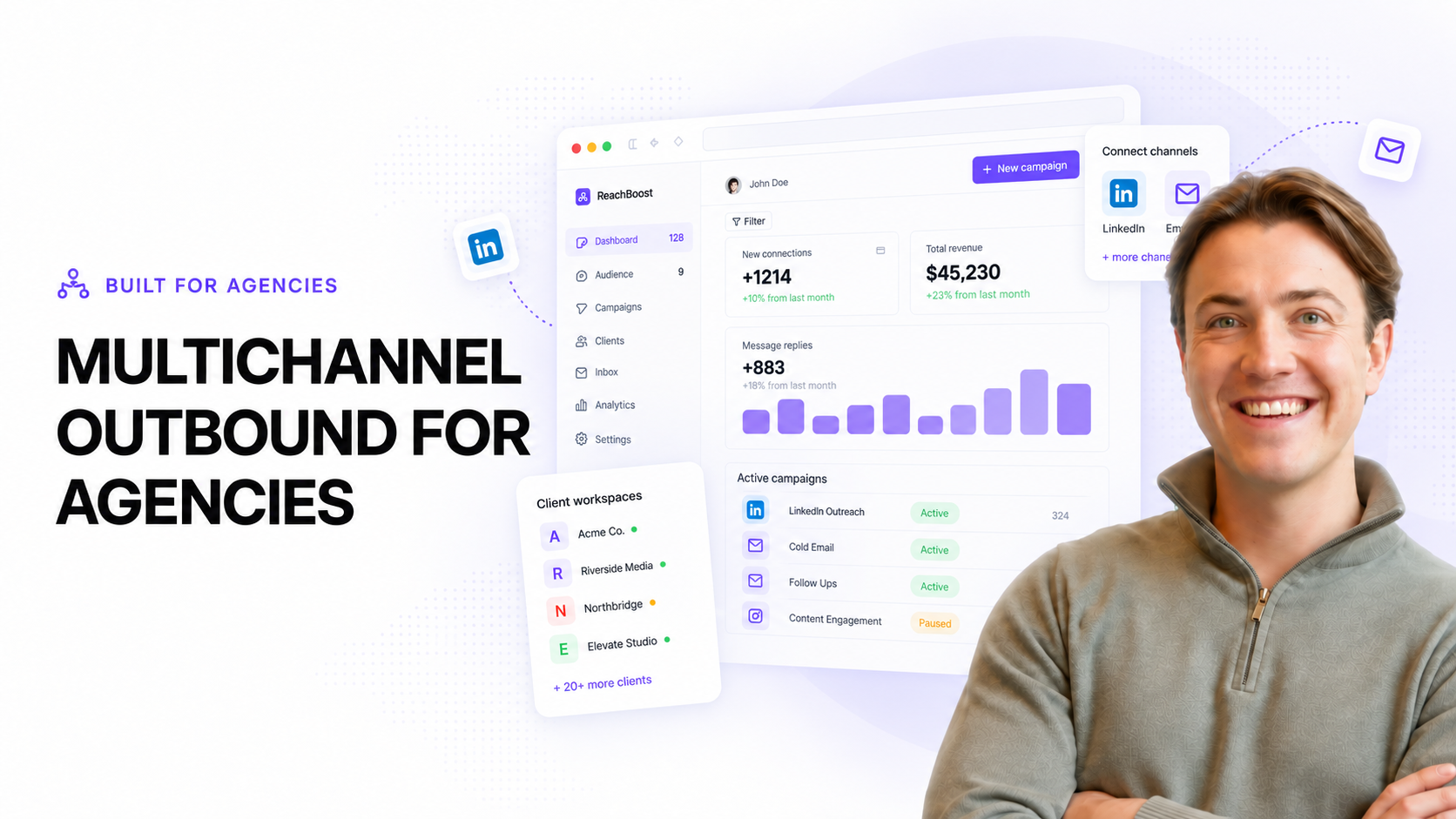

Multichannel Outbound for Agencies
That is part of it, but for an agency managing outbound across multiple clients, the real meaning goes much further.
Multichannel outbound is a coordinated system in which email, LinkedIn, lead data, campaigns and conversations work together around the same prospect. The goal is not to add more activity. It is to create one clear process that can be repeated across client accounts without losing control.
What Is Multichannel Outbound?
Multichannel outbound means reaching prospects through multiple coordinated channels as part of one campaign.
A sequence might include:
- An email introducing a relevant problem
- A LinkedIn profile visit that creates familiarity
- A connection request
- A second email with a different angle
- A LinkedIn message after the connection is accepted
- A condition that stops the remaining steps when the prospect replies
The important word is coordinated. If email and LinkedIn run independently, the prospect may receive overlapping messages, replies may remain hidden in different inboxes and the agency cannot see the complete journey.
Why Multichannel Outbound Matters More for Agencies
Running outbound for one company is relatively simple. Running it for many clients creates an operational problem.
Every client has different target markets, messaging, senders, inboxes, campaigns and reporting expectations. Team members need access to the right accounts without seeing or changing the wrong client data. Replies need to reach the correct owner. Underperforming campaigns need to be spotted quickly.
This means an agency needs more than campaign automation. It needs a central operating layer for client outbound.
The Difference Between Multiple Channels and a Multichannel System
An agency can use one tool for email and another for LinkedIn. Technically, that uses multiple channels. Operationally, however, the channels still exist in separate systems.
A true multichannel system connects the workflow:
- Prospects are managed from one shared source
- Email and LinkedIn steps belong to the same sequence
- Conditions determine which action happens next
- A reply can stop activity across all channels
- Conversations remain connected to the right lead and client
- Teams can monitor campaigns across all client workspaces
This is what turns separate outbound tools into one repeatable agency process.
What an Agency Multichannel Platform Should Include
Native Email and LinkedIn Outreach
Both channels should be available inside the platform itself. This allows the agency to build one sequence instead of synchronizing separate campaign tools.
Separate Client Workspaces
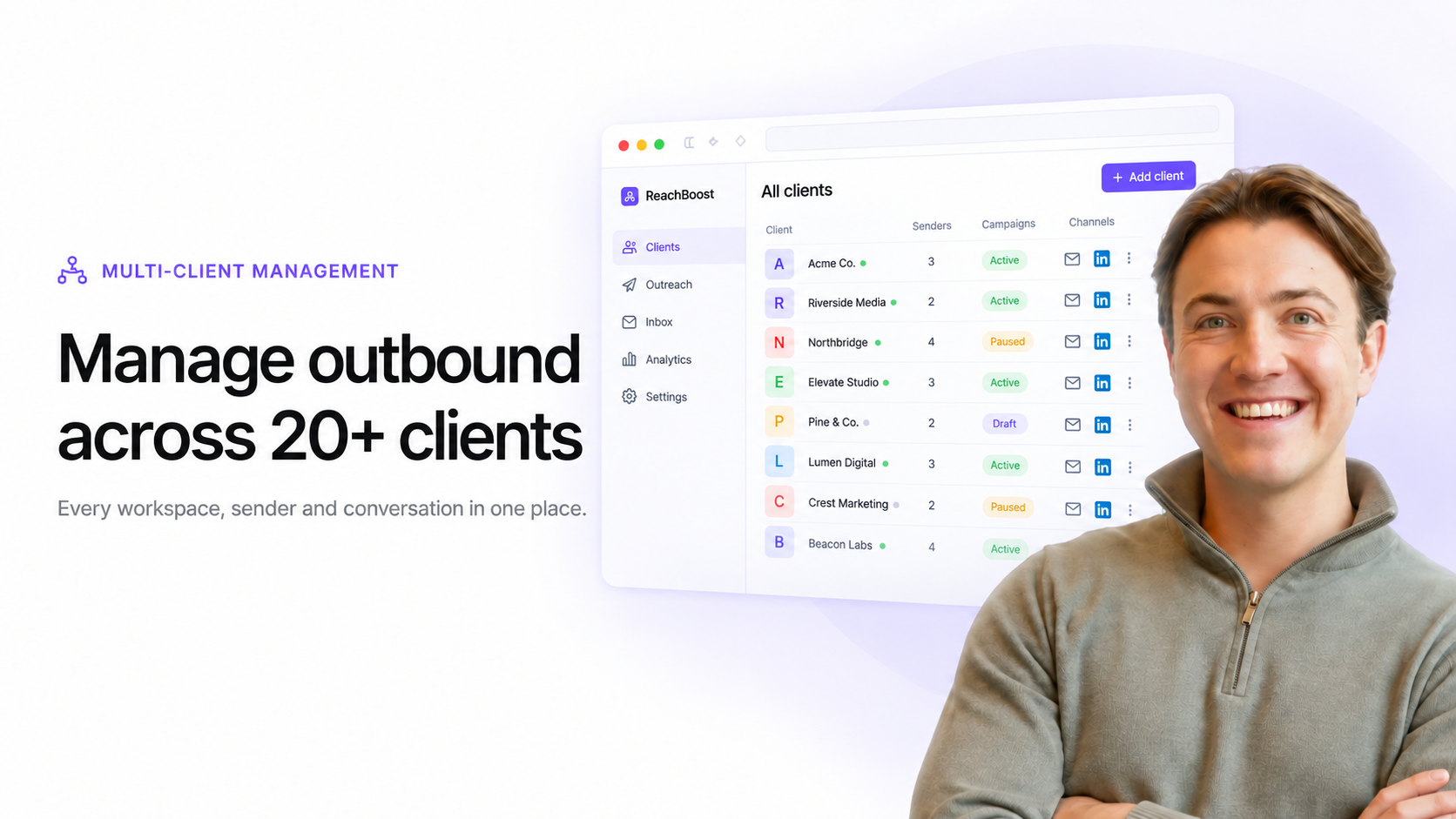
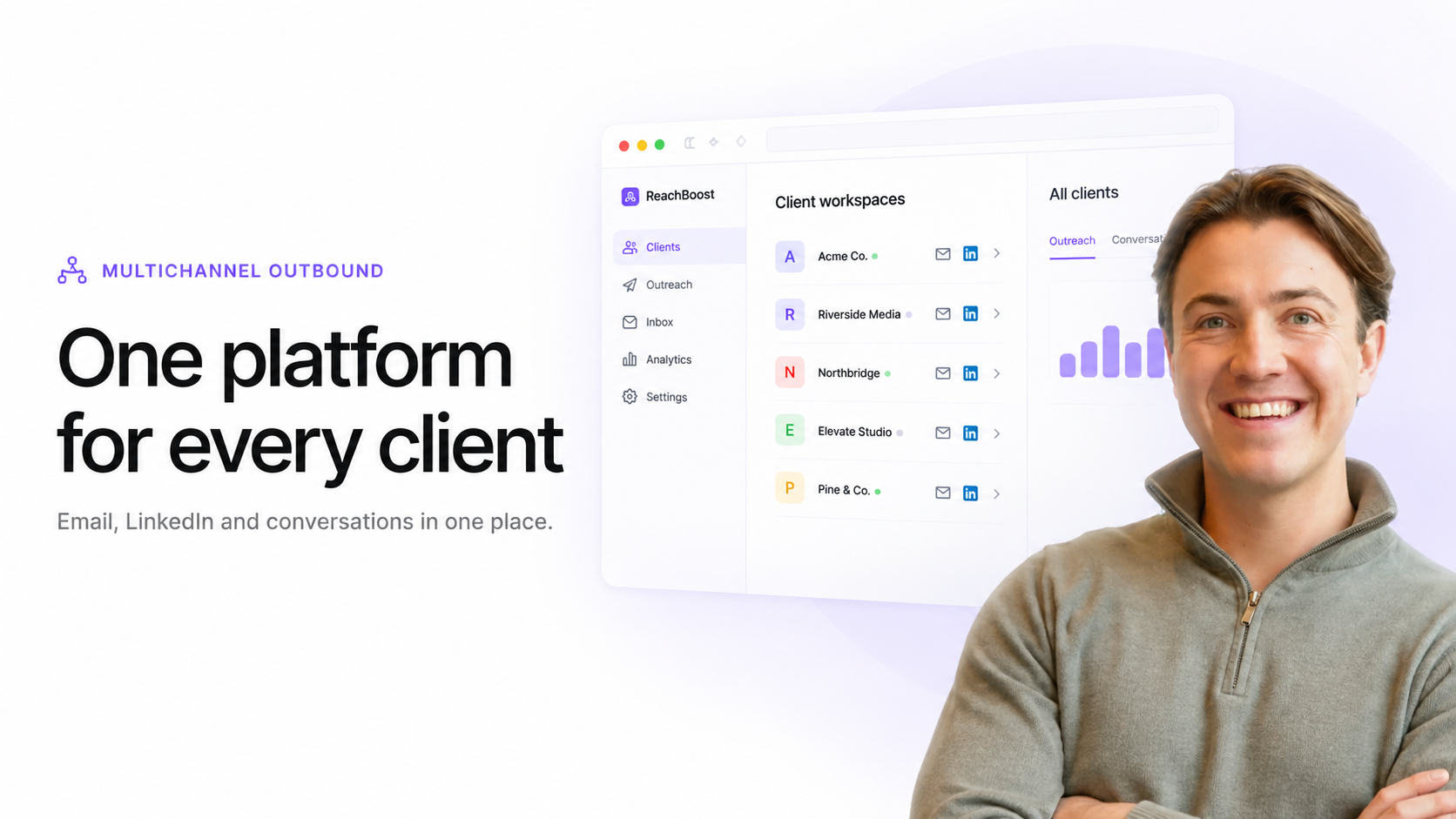
Each client needs a clear environment for its senders, lead lists, campaigns and conversations. This prevents data from becoming mixed and makes the account easier to hand over or scale.
Centralized Campaign Management
The agency needs an overview across clients. It should be possible to see which campaigns are active, which accounts need attention and where the team needs to take action.
Roles and Permissions
Internal team members, contractors and clients do not all need the same level of access. Permissions keep the operation organized as more people become involved.
One Conversation Layer
Replies should not disappear across personal inboxes and disconnected tools. A centralized conversation layer helps the team assign, qualify and follow up with leads.
Integrations and Automation
Outbound rarely operates alone. Campaign activity needs to connect with CRM systems, webhooks, APIs, lead sources and reporting workflows.
Where ReachBoost Fits
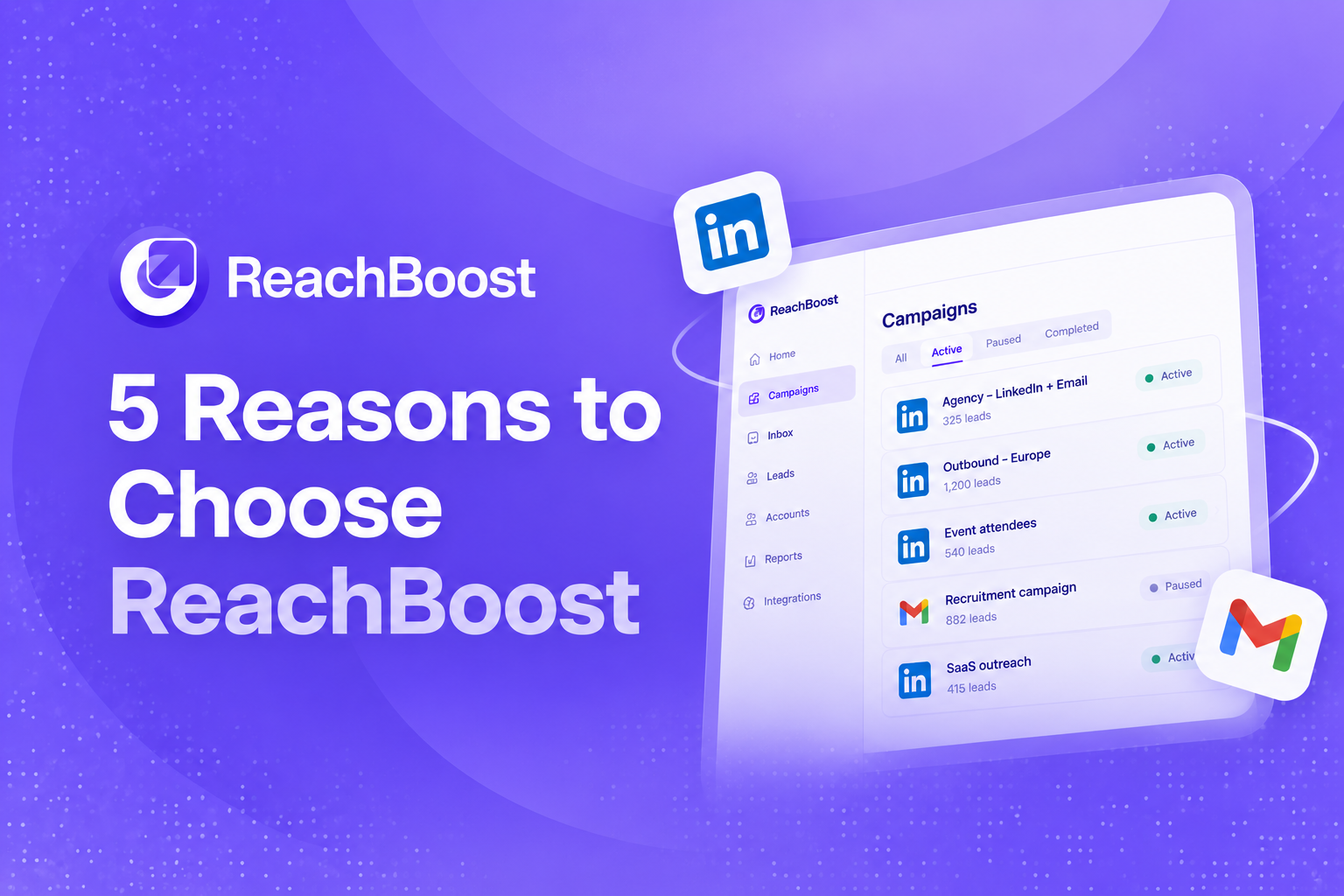
ReachBoost is a multichannel outbound platform for agencies that manage campaigns across multiple clients.
Agencies can combine native email and LinkedIn steps, manage client workspaces, monitor multiple senders, handle conversations and connect campaigns with the rest of their sales stack from one platform.
LinkedIn is one channel inside ReachBoost. Email is another. The product is designed around the broader operational challenge of running both across many client accounts.
Multichannel Outbound Is an Operating Model
The value of multichannel outbound does not come from sending more messages. It comes from connecting channels, people and client accounts into one manageable system.
For agencies, that means fewer disconnected tools, clearer ownership, better visibility and a repeatable way to manage outbound as the number of clients grows.



.svg)
.svg)
.svg)
.svg)
.svg)
.svg)

.svg)